
The arrival of August in Italy sees the approach of one its biggest holidays, namely, the 15th August, or Ferragosto. The term itself, Ferragosto, comes from the Latin term, Feriae Augusti or Augustus Holidays. Back in 18 BC, the then emperor Augustus, decided to create a public holiday, to not only glorify his name into history, by naming it after himself, but also to give the empire’s workers a well-deserved day off, after months of hard labour in the fields.
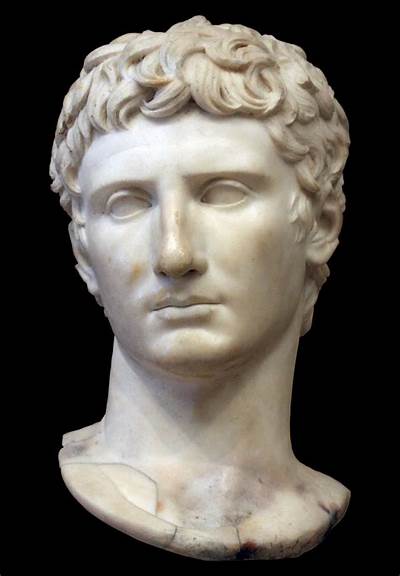
The First Roman Emperor, Augustus.
Back then, people would pass by their patrons houses to greet them, collecting a small tip for their troubles, before heading to one of the many horse races held across the Roman Empire – one of the most famous and indeed oldest, still survives today – the bi-annual palio in Siena. (James Bond fans will recall the palio featuring at the start of The Quantum of Solace.)
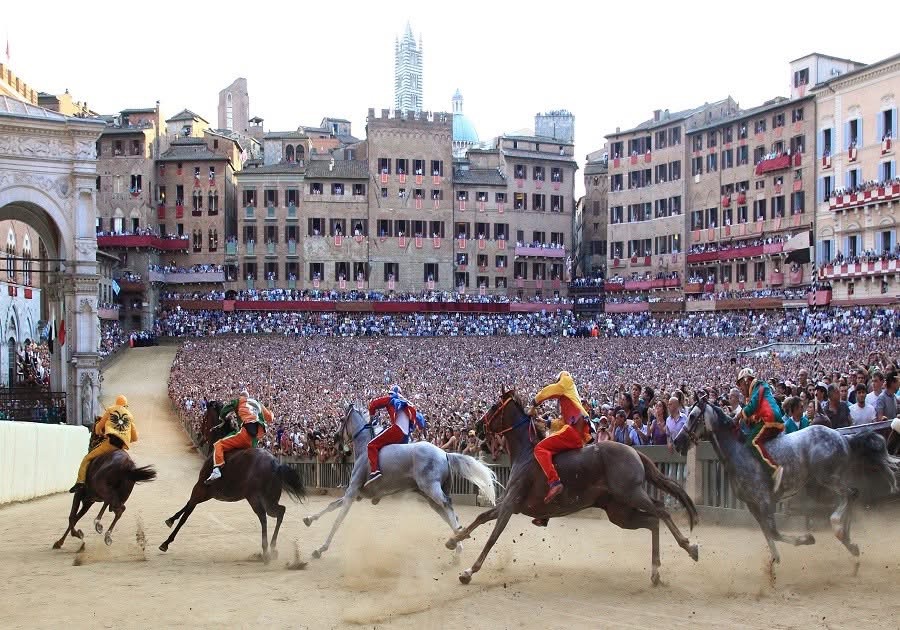
Siena’s Bi-annual Palio
While the empire’s horses didn’t enjoy the day off, its other beasts of burden did. Oxen, donkeys and mules were temporarily relieved from carrying all the heavy shit about, and decorated with flowers and garlands—usually a sign of their imminent sacrifice (this was the start of the Roman Empire, and we all know how things panned out for the Christians a bit later on), but on this occasion donkeys were a welcome addition.
Ferragosto however, was not traditionally held on August 15th but on August 1st (the first day of the month that Augustus himself introduced). It was the Catholic Church that pushed the event back in the calendar so that it coincided with the Assumption of Mary. Assumption Day is now a public holiday in many countries where they have strong roots in Catholic or Orthodox traditions. But while the Feast of the Assumption was introduced in the 5th century by Bishop Cyril of Alexandria, it was not until the 6th century that the tradition was adopted by the Eastern Church and recognised by the Western Church as a Holy Day of Obligation. I digress a little, but just to wrap that bit of history in an appropriate loin cloth.
Ferragosto during the Fascist Period
It doesn’t end there, Benito Mussolini’s Fascist regime popularised the tradition of travelling during Ferragosto, implementing the idea through corporate ‘associazioni dopolavoristiche’ (‘After-Work Associations’, which controlled the after-work activities of Italy’s workforce).
From 1925 onwards, Mussolini’s regime organised hundreds of trips to Italy’s major cities as well as its coastlines and mountains, facilitating travel for Italy’s working classes through heavily discounted train fares. Valid on the 13th, 14th and 15th of August, the offer consisted of two options: one-day travel within a radius of 100km or three-day travel within a radius of 200km.
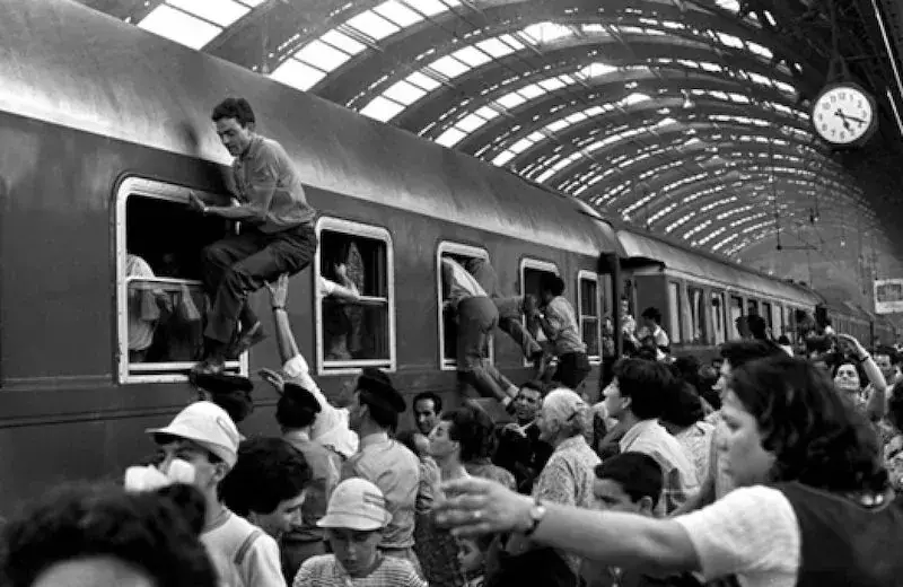
The ‘Popular Trains’ of Ferragosto
In terms of kickstarting domestic Italian tourism, the initiative was a roaring success. Many Italian families were able to visit the artistic cities of Venice, Florence, Rome and Naples for the first time while landlocked families were able to visit the coast; and families living on the coast were able to venture into the mountains. It really was a great idea put into practice on a national scale.
Today in true Italian style, and remember this is a nation for whom a 3 hour lunch break is a ‘religion’ not to be tampered with, Ferie as it has now become known, extends for at least half if not all of August. Even the banks are on short hours, I kid you not and many businesses close altogether to give their staff a chance to head to the seaside with their friends and families. If you go to Rome on the 15th August, you will find it as quiet as it can be, as most Romans are out of town, laying on their towels or sun loungers, basking in the cooler mountain air, having a stiff Aperol or chilled glass of wine.
As this is the first time I have been in Italy for the entire month, I’ve noticed that literally every town and village, no matter how small or large are having parties and festivals. These get advertised, if they are well organised, on Facebook, or even just with a poster papered to lampposts and town notice boards, right next to the funeral and birth notices. Every night the sound of Euro music beats out across the countryside, fireworks blast upwards into the night sky and endless piles of Italian street food are scoffed. Everything from prog rock, 80’s disco to Italian classics are go, vans serving porchetta and torta di testa, (an Umbrian flat bread, filled with pretty much anything) can be found in the hands of hungry locals.
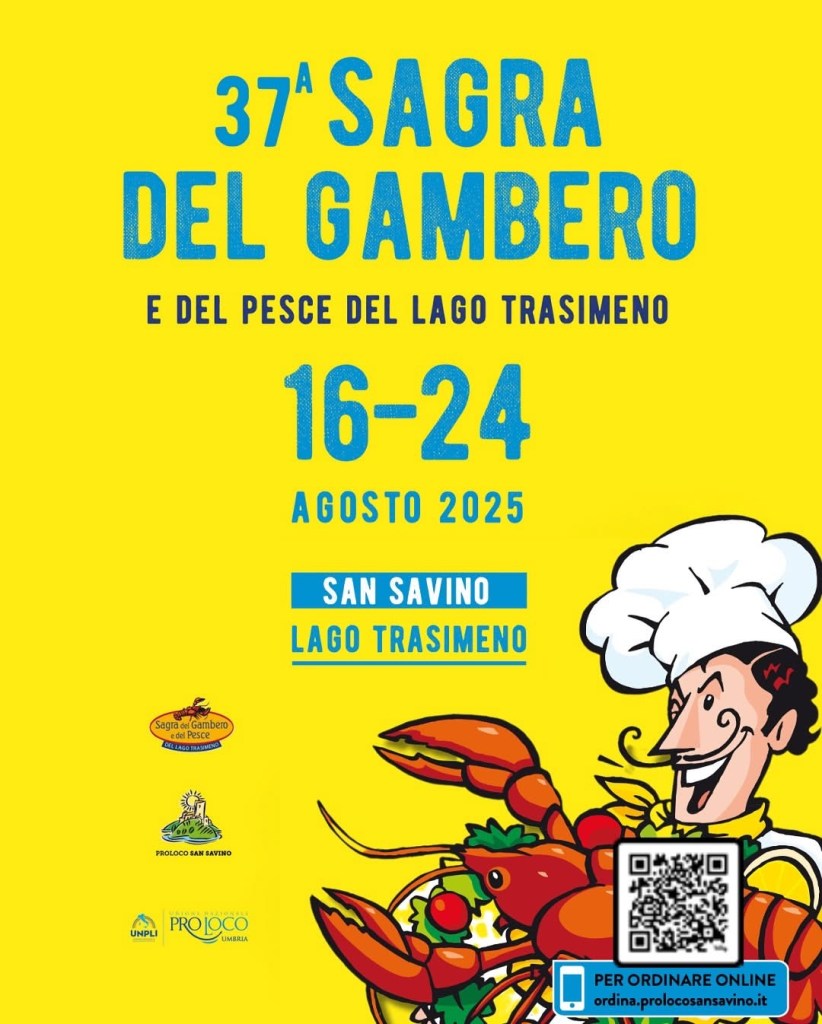
But for me the atmosphere and the holiday/party vibes of unbelievable conviviality have stuck in my mind for ever, seared in with the heat that has been this summer; which has included fire breathing acrobatics, alongside old-fashioned fairs, parades and food as far as the eye can see. They embrace August, just like the first Roman emperor intended and they’ve rolled out the 15th into the entire month, of their summer holiday season.
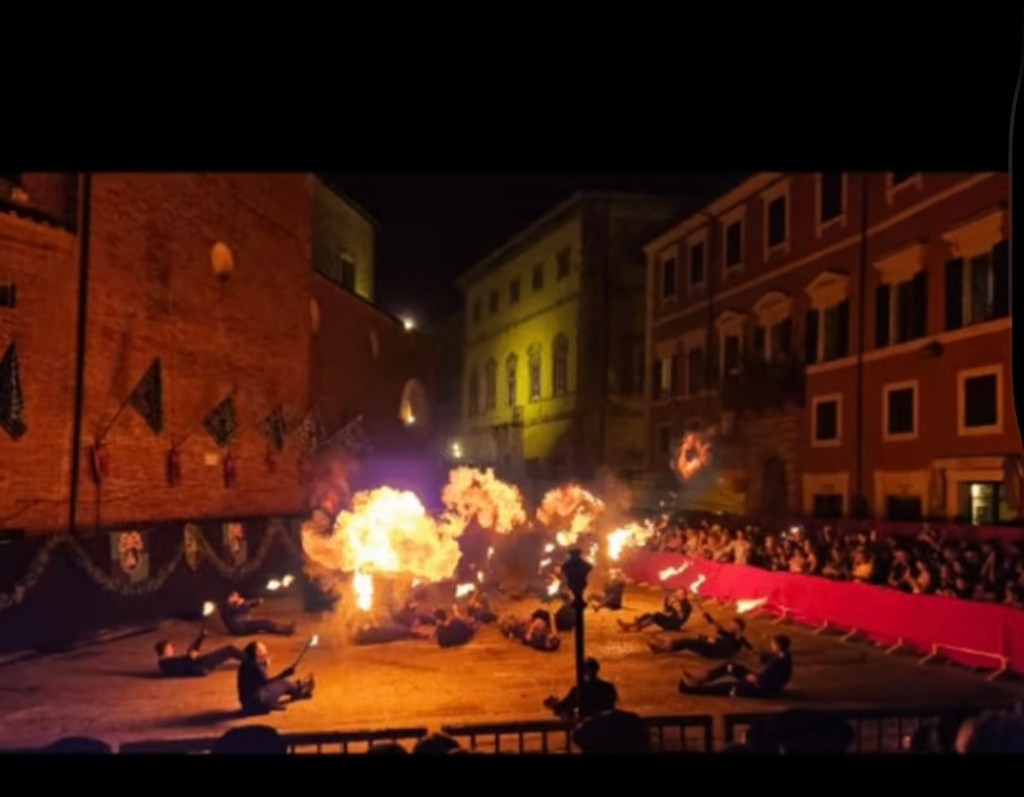
My nearest local hill town is small, around 500 inhabitants, they had a week long festa, with a parade of medieval costumes, music until 1am or later each night and some serious food carts. They embodied one of the reasons I wanted to move here to live, their passion for fun and celebrations, while respecting history and tradition. It rained heavily at the weekend, along with a stunning and loud storm, but nothing that would dampen the Italian holiday spirit. Tonight, I am off into town for skewers of fish kebabs, a cup of wine and a band playing into the night. Happy August wherever you are.
Spegni le luci della città
Cosi che il cielo s’illumina
Balliamo l’ultima volta, ma
Lyrics & Song by Cesare Cremonini
(Turn off the city lights, So that the sky lights up, Let’s dance the last time)


 Write Up My Street