River Deep, Mountain High

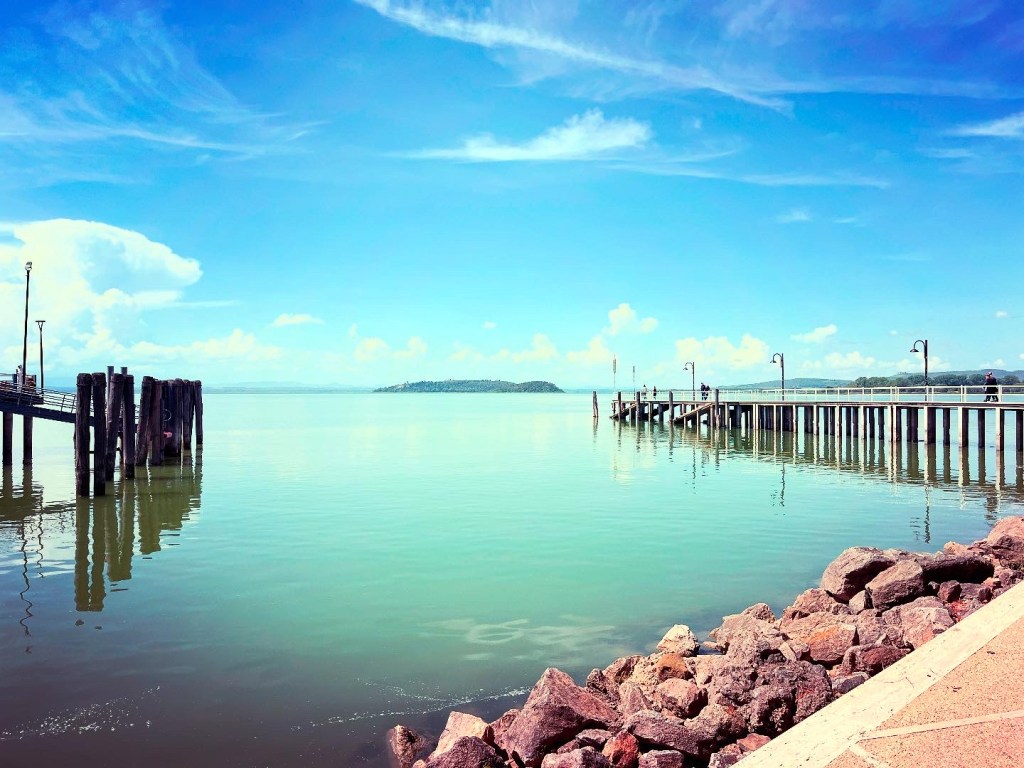
Having spent the last 6 months living in the mountains, overlooking a large flat plain and river, while seeing how the majority of Umbrians in this area, work the land for food and resources. Right now, the olives are being harvested, a really bad year after a long, hot and dry summer. Also, people are out collecting and chopping wood and building huge piles outside their homes, ready for the winter home fires. Italy, doesn’t have its own natural gas resources, so winter energy bills can be high here, which is why so many have wood burners. But it is fuel of another sort that my story today is about. It’s about a brown coal called lignite and a young local man, earlier last century.

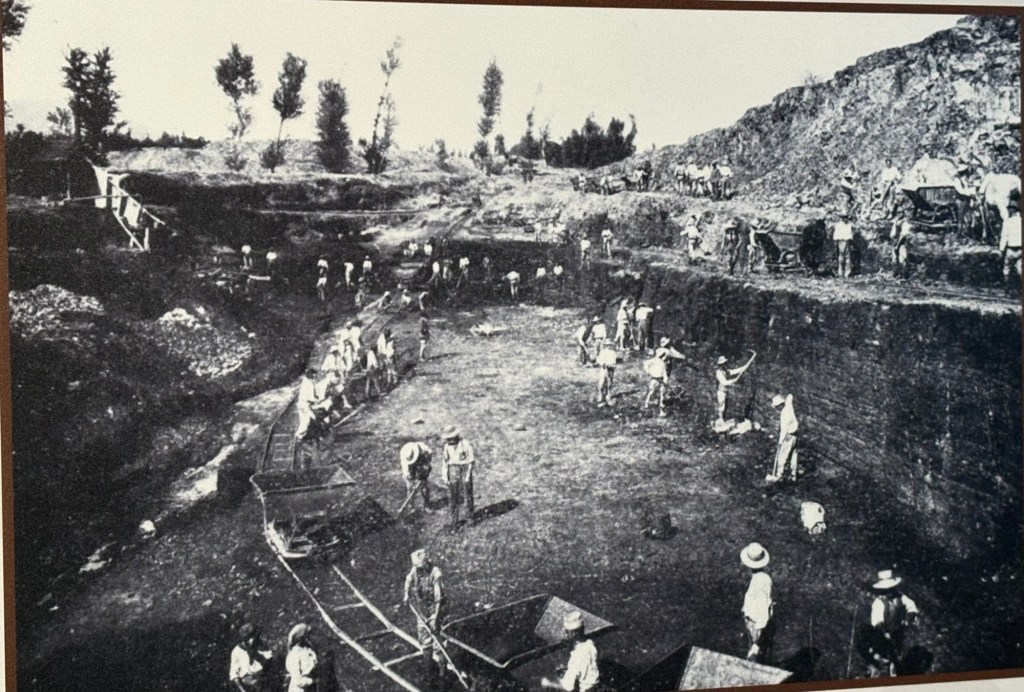
That vast plain that I look down on, and drive across most days, was once… well actually I need to go back further than a little bit, in fact a bloody long way back, to 1.8 million years ago, in the Pliocene Era. It was from this time period and the breaking down of plant matter that a huge presence of lignite, a type of brown fossil coal, settled into seams on what is now, that valley floor near Perugia. Lignite was to become so important in the region and wider parts of Italy as a fuel, so much so that in 1925 it was a justified expense to build the first power plant in Pietrafitta. By 1958 a new power plant, called “City of Rome”, including vast almost War of the Worlds looking excavators were deployed to remove the layers of soil and rock, so that an open cast lignite mine could be worked.
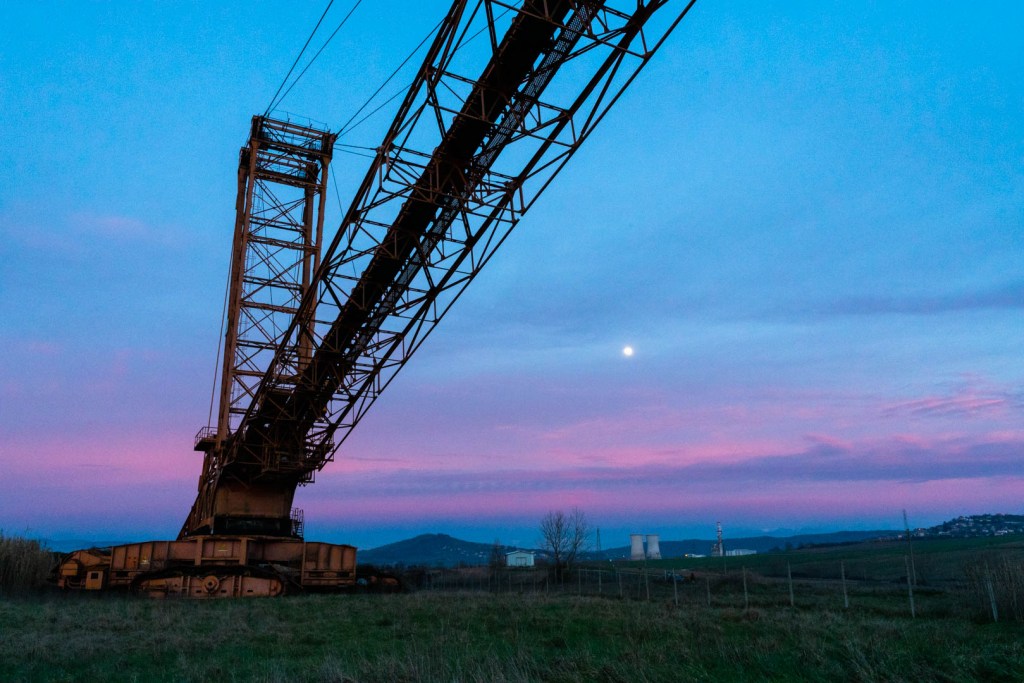
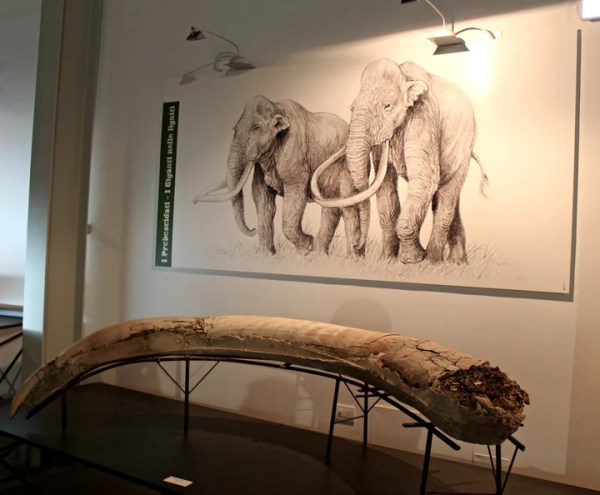
But this isn’t so much about the coal mine, but about one particular man, who was sent to work in the mine after his father was killed in WWII. His name was Luigi Boldrini, he was around 14 years old and he suddenly had to be the bread winner for his family. At first Luigi worked in the mine, but as he got older, he was given more responsibility and put in charge of running one of the huge rock and earth moving machines. By this time, he was assistant mine foreman, when one day he noticed something that wasn’t the usual rock debris or coal, when he stopped what he was doing and went to look he discovered a huge fossilised mammoth tusk. 
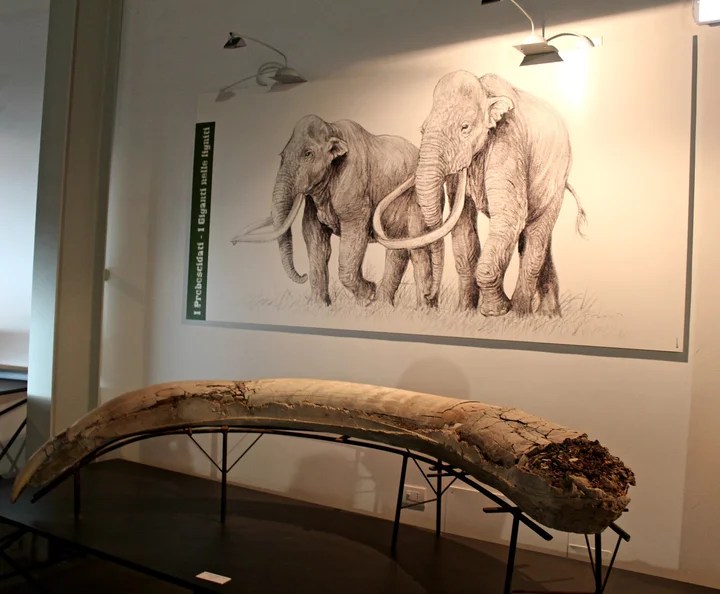
Mammoths were once very prevalent in the area and they had lived from about 2 million years ago to 9,000 years ago, during the last Ice Age (the Pleistocene Epoch). Just for super quick time referencing, the Pliocene lasted from around 5.333 million to 2.58 million years ago. It marked the beginning of the transition from a warm, moist climate (perfect coal making conditions) to the more fluctuating and cooler conditions of the Pleistocene, and saw the first appearances of early human species such as Australopithecus and Homo habilis. Ironically that flat plain was also the site of a large battle between Attila the Hun and Italians in the 440’s AD, he famously arrived on an elephant, only his elephant survived that battle and most of his troops including Attila died of the diseases they caught along the way. Those plains have seen elephants in both their prehistoric and historic forms.

Lyrics by: J.Pat O’Malley – ‘Colonel Hathi’s March’

(With apologies, you try and find a decent song about elephants or even mammoths.)

But back to the main story; Luigi stopped what he was doing and went to the mine office to report what he had found and ask that they stop excavating the coal in that area just while it could be safely retrieved. The mine was hugely important for keeping not only Umbria going, but also Rome. The mine office said no, and get back to work.
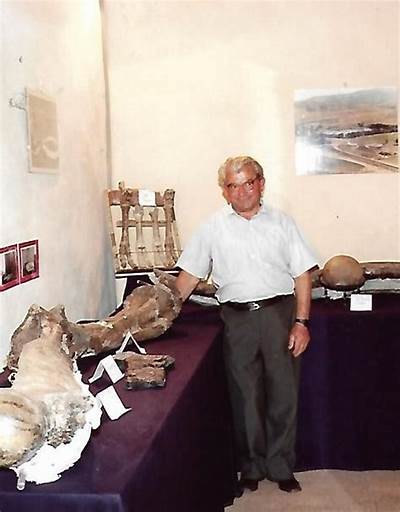
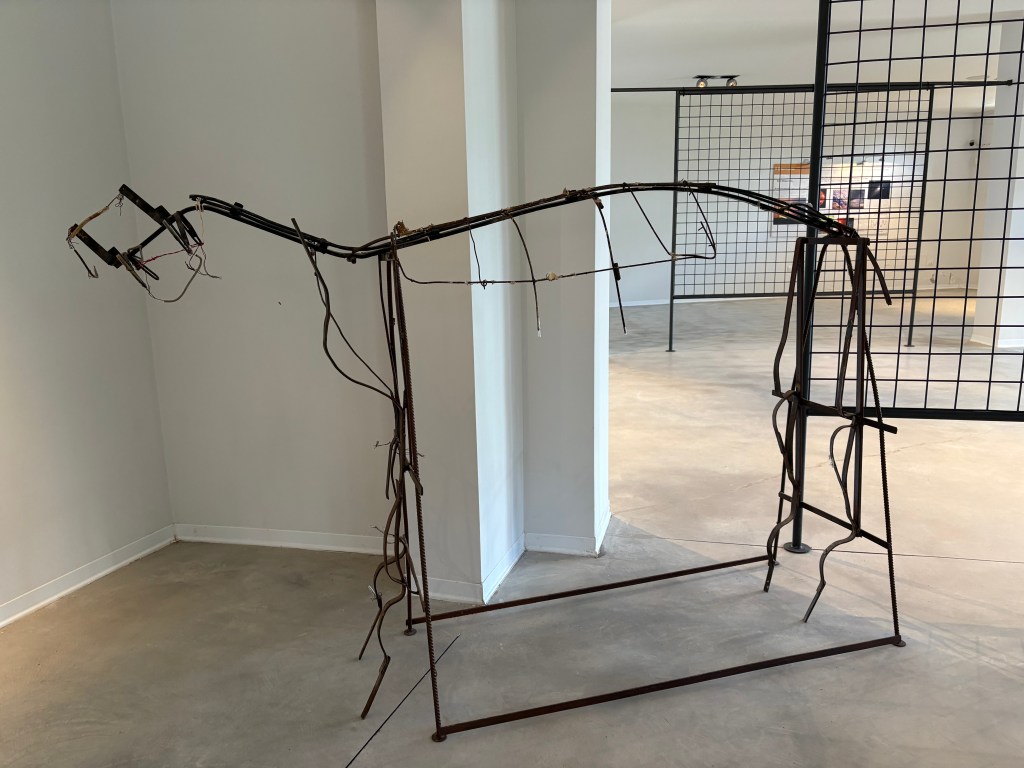
But Luigi, thank the fossil gods up there, did everything he could to save the tusks. Taking time after his long shifts to dig them out and save what he could. But he kept on finding more and so he worked most nights looking for and removing what he could find and save. He even built iron frames to support the tusks and stored all the fossils carefully on racking in his own garage. This went on for years, and sometimes if he found larger remains, he would pour concrete over it to protect it from mine machinery, and come back later with friends to tip it over and bring it to his garage.
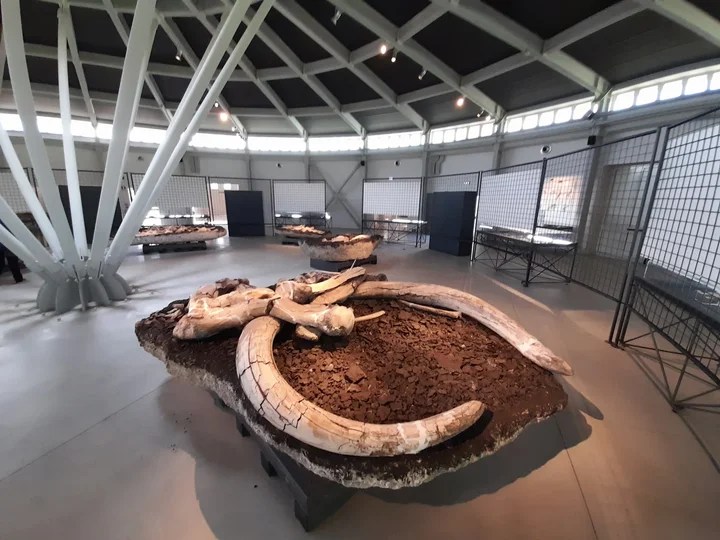
Years later when the mine company had wised the f*ck up and stopped being historical saboteurs, they began to allow the retrieval of remains. Sadly, by then, Luigi had died. But his legacy, his unbelievably unprecedented amount of work, dedication and fascination for what he found was not in vain. There is now a Paleontological Museum named after him, with all the fossils he found, including the upside-down ones, cast in cocoons of concrete, their contents too fragile and valuable to risk separating from the cement. Here in the museum, you can even see the iron frames he so carefully designed and forged.

His paleontological collection is displayed alongside that of the University of Perugia and the Umbrian Museums Department, his finds are considered a flagship of national paleontology and one of the most important in Europe, with current analysis looking at one of those mammoth tusks – from what is now known to be the largest mammoth in Europe, and possibly the world. It is an absolute whopper. 

Over all those years, Luigi found thousands of fossils belonging to many animal species, such as fish, amphibians, birds, bears, rhinos and elephants, monkeys, turtles and several species of deer, including an unknown species and many more. Findings of seeds, leaves and shells were also included, as well as that precious collection of Mammoths, the Mammuthus Meridionalis.
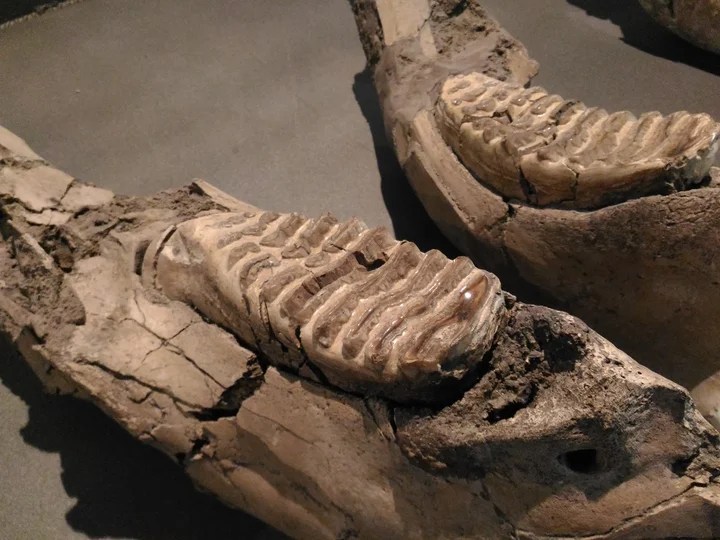
A few years ago, an underground car park was being dug out for a local shopping centre, and they found more mammoth remains, this time, they had learned their lesson and work was stopped while they were carefully removed and preserved. 

I guess for me, his story began with such sadness at the loss of his father, and having to work so hard at such a young age. But his discovery and his tenacity in searching for, and preserving his finds, makes him nothing short of a hero. I studied paleontology as part of my degree and its importance as a science and historical reference point is incredible. He had no training but he knew the fossils were worth the hours of hard work and preservation, and he has left a ground-breaking legacy behind him. 

Follow me at: @write.upmystreet
Augustus, Hot Augustus

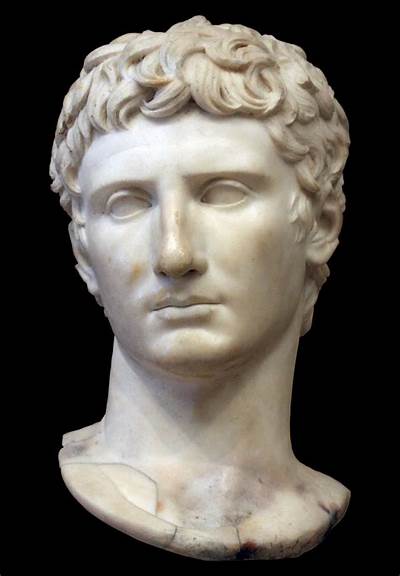
The arrival of August in Italy sees the approach of one its biggest holidays, namely, the 15th August, or Ferragosto. The term itself, Ferragosto, comes from the Latin term, Feriae Augusti or Augustus Holidays. Back in 18 BC, the then emperor Augustus, decided to create a public holiday, to not only glorify his name into history, by naming it after himself, but also to give the empire’s workers a well-deserved day off, after months of hard labour in the fields. 

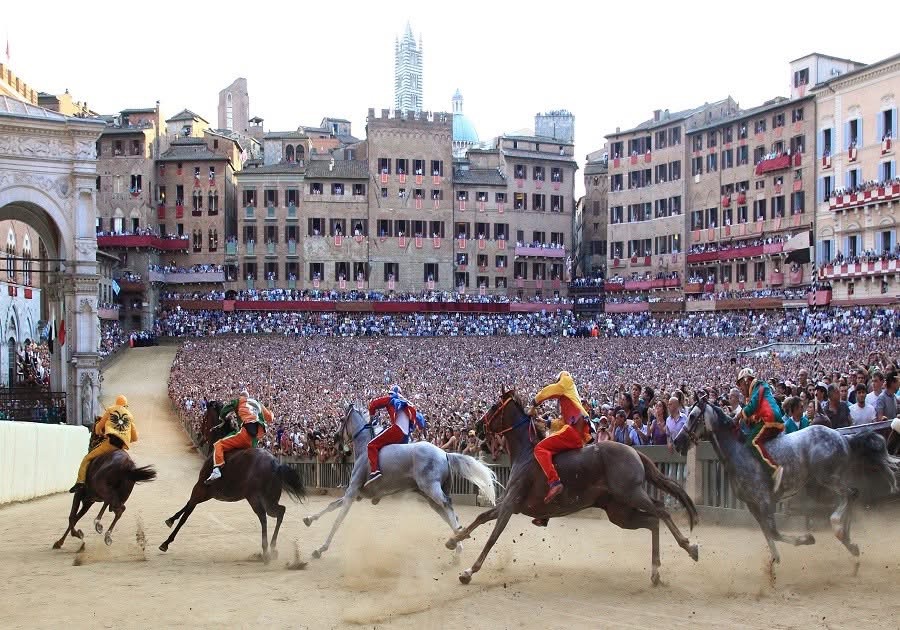
Back then, people would pass by their patrons houses to greet them, collecting a small tip for their troubles, before heading to one of the many horse races held across the Roman Empire – one of the most famous and indeed oldest, still survives today  – the bi-annual palio in Siena. (James Bond fans will recall the palio featuring at the start of The Quantum of Solace.)

While the empire’s horses didn’t enjoy the day off, its other beasts of burden did. Oxen, donkeys and mules were temporarily relieved from carrying all the heavy shit about, and decorated with flowers and garlands—usually a sign of their imminent sacrifice (this was the start of the Roman Empire, and we all know how things panned out for the Christians a bit later on), but on this occasion donkeys were a welcome addition.

Ferragosto however, was not traditionally held on August 15th but on August 1st (the first day of the month that Augustus himself introduced). It was the Catholic Church that pushed the event back in the calendar so that it coincided with the Assumption of Mary. Assumption Day is now a public holiday in many countries where they have strong roots in Catholic or Orthodox traditions.  But while the Feast of the Assumption was introduced in the 5th century by Bishop Cyril of Alexandria, it was not until the 6th century that the tradition was adopted by the Eastern Church and recognised by the Western Church as a Holy Day of Obligation. I digress a little, but just to wrap that bit of history in an appropriate loin cloth.

Ferragosto during the Fascist Period

It doesn’t end there, Benito Mussolini’s Fascist regime popularised the tradition of travelling during Ferragosto, implementing the idea through corporate ‘associazioni dopolavoristiche’ (‘After-Work Associations’, which controlled the after-work activities of Italy’s workforce).

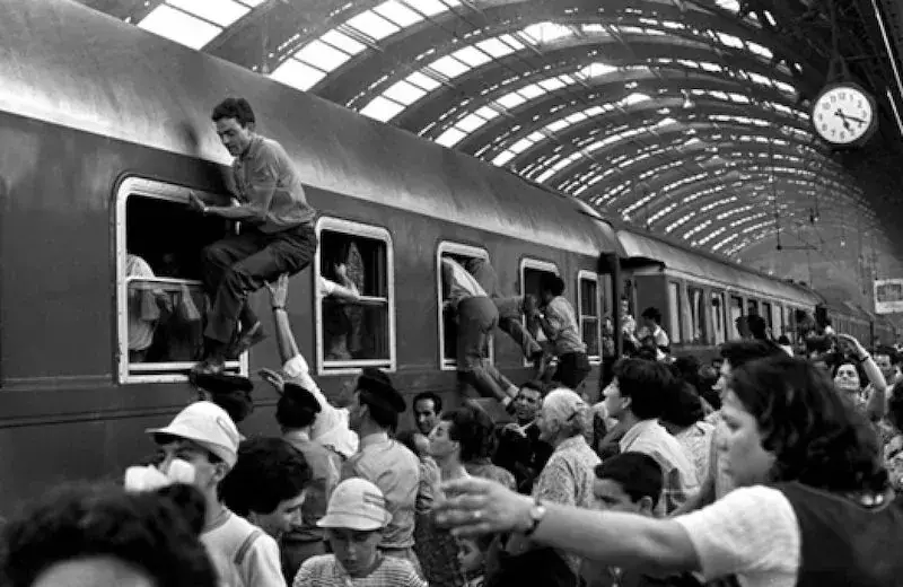
From 1925 onwards, Mussolini’s regime organised hundreds of trips to Italy’s major cities as well as its coastlines and mountains, facilitating travel for Italy’s working classes through heavily discounted train fares. Valid on the 13th, 14th and 15th of August, the offer consisted of two options: one-day travel within a radius of 100km or three-day travel within a radius of 200km.

In terms of kickstarting domestic Italian tourism, the initiative was a roaring success. Many Italian families were able to visit the artistic cities of Venice, Florence, Rome and Naples for the first time while landlocked families were able to visit the coast; and families living on the coast were able to venture into the mountains. It really was a great idea put into practice on a national scale.

Today in true Italian style, and remember this is a nation for whom a 3 hour lunch break is a ‘religion’ not to be tampered with, Ferie as it has now become known, extends for at least half if not all of August. Even the banks are on short hours, I kid you not and many businesses close altogether to give their staff a chance to head to the seaside with their friends and families. If you go to Rome on the 15th August, you will find it as quiet as it can be, as most Romans are out of town, laying on their towels or sun loungers, basking in the cooler mountain air, having a stiff Aperol or chilled glass of wine. 

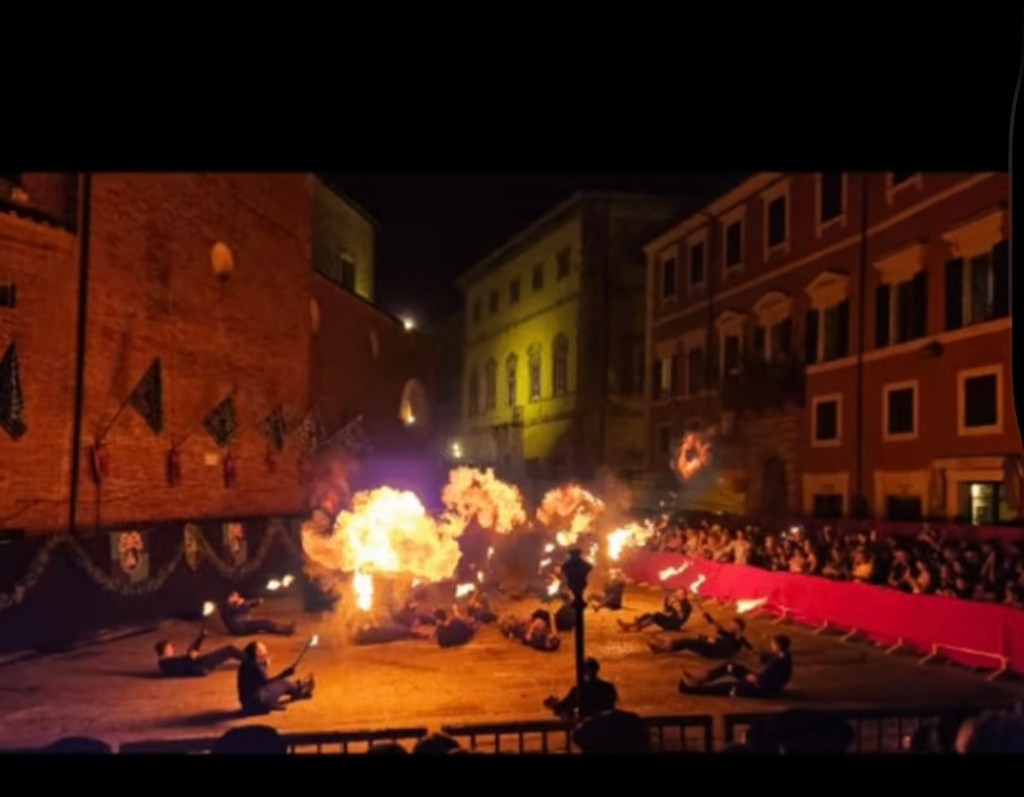
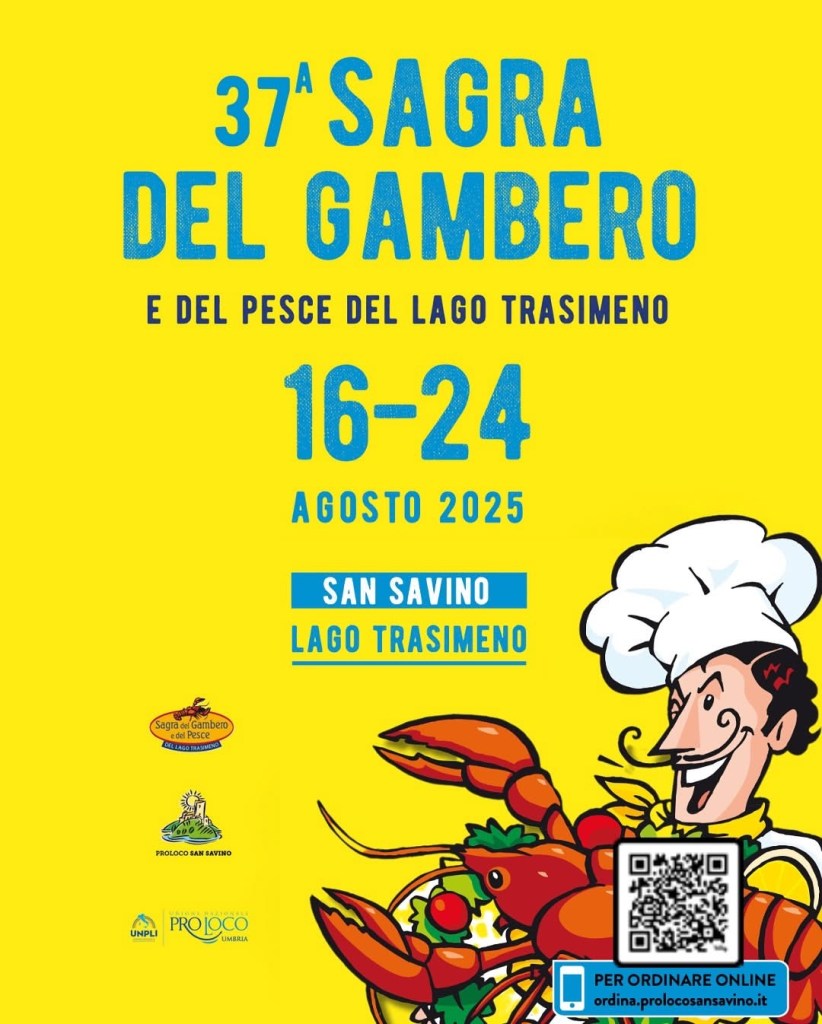
As this is the first time I have been in Italy for the entire month, I’ve noticed that literally every town and village, no matter how small or large are having parties and festivals. These get advertised, if they are well organised, on Facebook, or even just with a poster papered to lampposts and town notice boards, right next to the funeral and birth notices. Every night the sound of Euro music beats out across the countryside, fireworks blast upwards into the night sky and endless piles of Italian street food are scoffed. Everything from prog rock, 80’s disco to Italian classics are go, vans serving porchetta and torta di testa, (an Umbrian flat bread, filled with pretty much anything) can be found in the hands of hungry locals. 

But for me the atmosphere and the holiday/party vibes of unbelievable conviviality have stuck in my mind for ever, seared in with the heat that has been this summer; which has included fire breathing acrobatics, alongside old-fashioned fairs, parades and food as far as the eye can see. They embrace August, just like the first Roman emperor intended and they’ve rolled out the 15th into the entire month, of their summer holiday season.  

My nearest local hill town is small, around 500 inhabitants, they had a week long festa, with a parade of medieval costumes, music until 1am or later each night and some serious food carts.  They embodied one of the reasons I wanted to move here to live, their passion for fun and celebrations, while respecting history and tradition.  It rained heavily at the weekend, along with a stunning and loud storm, but nothing that would dampen the Italian holiday spirit. Tonight, I am off into town for skewers of fish kebabs, a cup of wine and a band playing into the night. Happy August wherever you are. 

Vivere Senza Paura

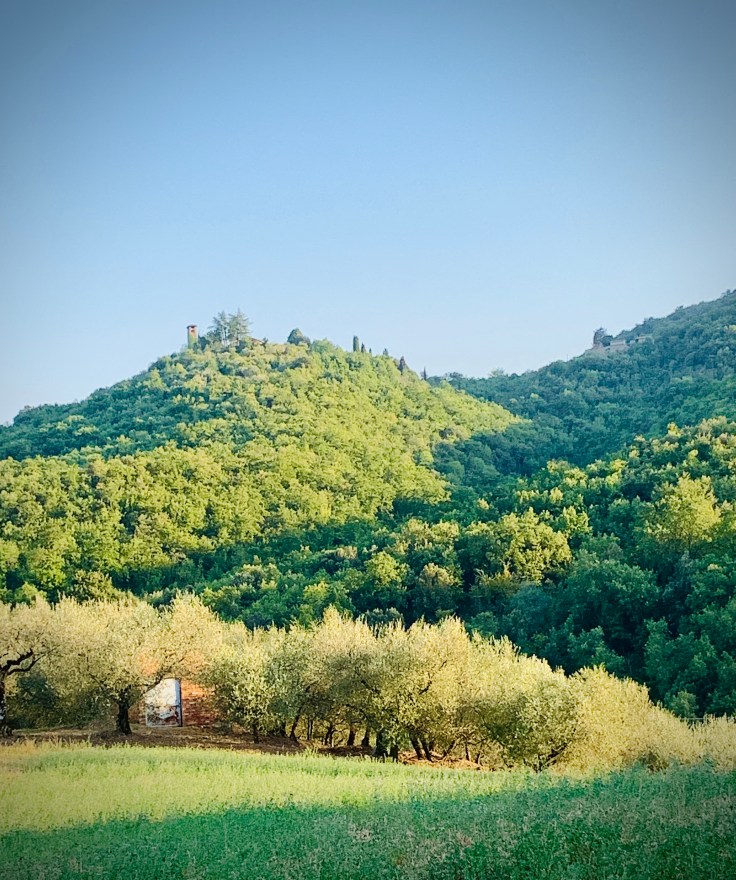
(Live without fear) This post has been a very long time in the making, not just typing it out and composing the words but also having it quite certain, or as certain as it can be in my head. I’ll take you back a few years first; About 21 years ago I bought a little apartment in Italy, it’s part of a 12th Century castle and it’s all it should be with beams, tiled floors, a leaky toilet cistern, a fireplace and a view out onto a garden filled with lavender, rosemary and olive trees. I can still remember the first time I saw the place; I was with a friend from work who had come along with me on my viewing trip to Umbria. We drove around some winding mountain roads and as we turned a corner, to one side was a stunning medieval hill town with the valley in the distance, perched on top of a rocky outcrop, like something other worldly, but to the other side, was a tiny bell tower on top of a hill. 

That bell tower, built by Franciscan monks and housing a bell brought from Rhodes (so the story goes) belonged to the castle, and it was a little more than love at first sight (rose tinted specs went right out the window). It all began even further back, following a short lived marriage and once the dust settled on the divorce papers, I realised I needed to make some kind of future proof investment. Or at least buy part of a castle in Italy. I opted for the latter. Every year since, apart from the unmentionable joy that was Covid, I have been over at least once. It was the first place I wanted to be once I’d recovered from breast cancer and not surprisingly after a couple of years of more recent life ups and downs, the place I want to be at most of all. It has something magical about it, it rebalances my brain and rebolsters my supply of shoes. I’ve been there enough now to have chucked the pink tinged glasses in the bin and stopped a long time ago from wondering why the DIY shops are shut on Saturday lunchtimes, when surely that’s when they do most business. I only needed telling once, ‘well they have to eat’ was the stellar reply. A country where they take their food seriously and also use, believe it or not very few fresh ingredients to create some of the best food in the world. Plus also, of course some lyrical inspiration from George.

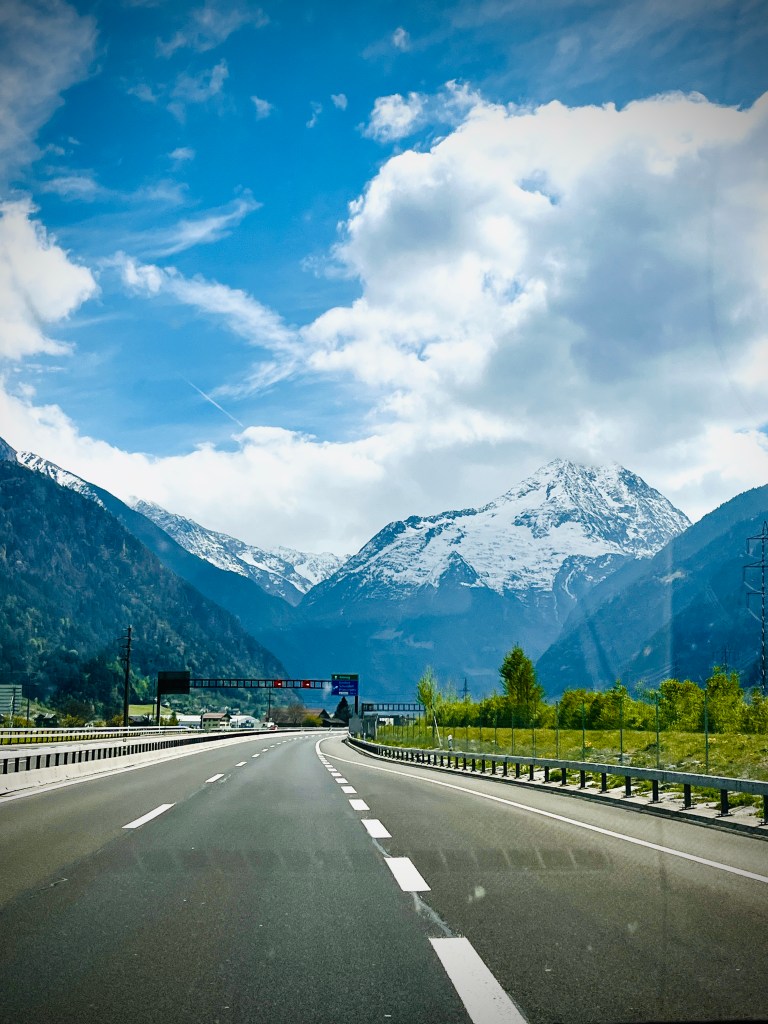
And so, I made an enormous and life changing decision to move to Italy, for good. I completed on the sale of my house last month, loaded everything apart from a car full of luggage plus my cats, into a lorry and moved myself into a little flat for a couple of weeks while the cats underwent all their EU vaccinations and AHC’s. Then, we boarded LeShuttle and started a 2 ½ day, one way, road trip to Umbria. I had my last hair cut at the salon I’ve been going to for over 20 years, said goodbye to friends and family (who I am fully expecting to visit asap) and we headed into what was to be one of many tunnels. Night one was in Nancy, a fairly basic hotel, I just about fitted my case and two cats in. Zero sleep that night, and the next day dragged into a further series of tunnels as we snaked our way across that corner of France. The Vosges mountains couldn’t be dented by the rain and drizzle as we crossed into Switzerland. Weirdly Switzerland isn’t what I expected, or at least all the bits I saw. More or less every valley was occupied by a pharmaceutical factory, these things are vast and the towns were less than idyllic, that is until we swung through the last of the next batch of (yes, you’ve guess it…) more tunnels.  I also discovered the role of being in the front passenger seat in a RHD vehicle; you’re chief in charge of toll booth tickets and payments. 

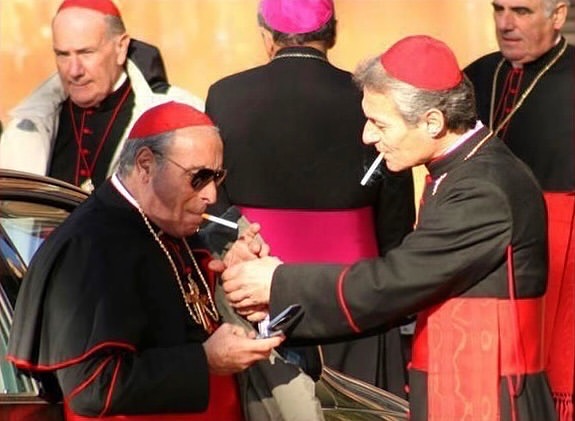
Since arriving it has been to say the least a week of unexpected light and the sadness of the death of Pope Francis. Let’s hope the next one fills his well-worn shoes, I won’t say who my Euros are on, in case I jinx it.

I’ve made a restart (after last summer) on house or flat hunting, seen a few definite no’s and one possible contender. The cats are slowly settling in, although living in a medieval castle is at times quite noisy, all those hard terracotta tiled floors carry every sound from your neighbours. One of the cats keeps hiding in the wardrobe while the other is a little braver and has realised, she can jump off my hand painted cupboard and land squarely on my bladder first thing in the morning. The spring festivals are underway and so far, cheese, tulips and asparagus, plus I found the most amazing fresh pasta shop; waddled home with a bag full. 

They say you should follow your dreams; life is too short, and you only live once… you know all the rest. For most of us we say these things and don’t do it, or at least not in any way that truly constitutes following a dream. But I’ve sailed too close to death myself and lost too many others, wondering what is coming next, to hesitate anymore over what has on one side been a tortuous 10 months of selling, decluttering and getting rid of over half my possessions, not to mention an awful lot of shoes, while on the other looking forward to a life in Umbria.  Time can be a storm in which we allow ourselves to be lost, but it can also be one that brings us joy, gelato, homemade pasta and all the Aperol’s. I’m going with the latter. 

And to end appropriately with a quote from one of my most favourite songs;

Follow me: @write.upmystreet

Blog at WordPress.com.

Up ↑