Having spent the last 6 months living in the mountains, overlooking a large flat plain and river, while seeing how the majority of Umbrians in this area, work the land for food and resources. Right now, the olives are being harvested, a really bad year after a long, hot and dry summer. Also, people are out collecting and chopping wood and building huge piles outside their homes, ready for the winter home fires. Italy, doesn’t have its own natural gas resources, so winter energy bills can be high here, which is why so many have wood burners. But it is fuel of another sort that my story today is about. It’s about a brown coal called lignite and a young local man, earlier last century.
That vast plain that I look down on, and drive across most days, was once… well actually I need to go back further than a little bit, in fact a bloody long way back, to 1.8 million years ago, in the Pliocene Era. It was from this time period and the breaking down of plant matter that a huge presence of lignite, a type of brown fossil coal, settled into seams on what is now, that valley floor near Perugia. Lignite was to become so important in the region and wider parts of Italy as a fuel, so much so that in 1925 it was a justified expense to build the first power plant in Pietrafitta. By 1958 a new power plant, called “City of Rome”, including vast almost War of the Worlds looking excavators were deployed to remove the layers of soil and rock, so that an open cast lignite mine could be worked.
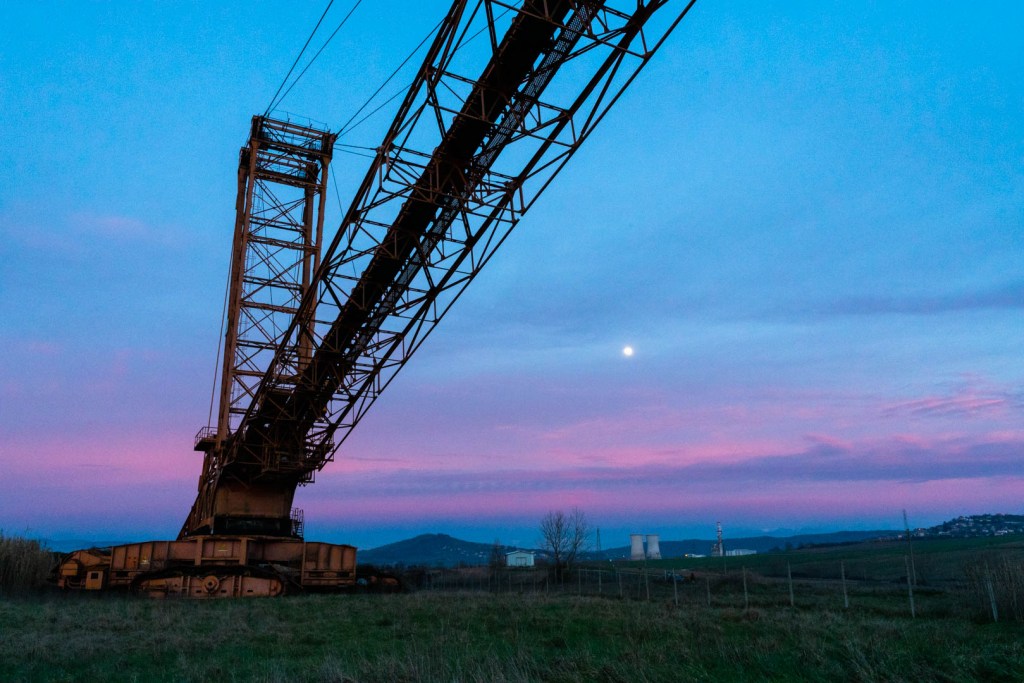
One of the huge dredging machines, used to clear the lignite mines.
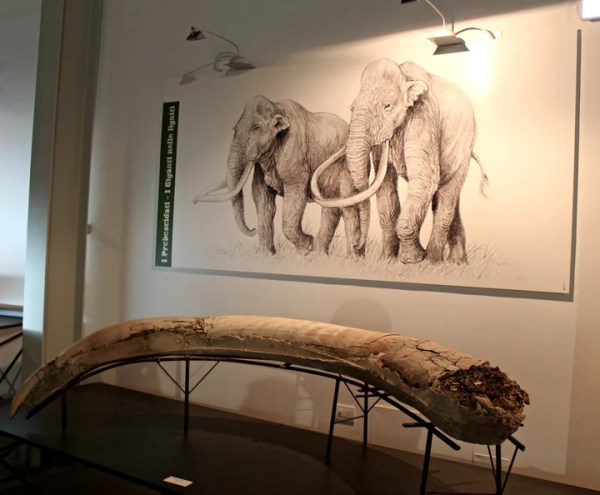
But this isn’t so much about the coal mine, but about one particular man, who was sent to work in the mine after his father was killed in WWII. His name was Luigi Boldrini, he was around 14 years old and he suddenly had to be the bread winner for his family. At first Luigi worked in the mine, but as he got older, he was given more responsibility and put in charge of running one of the huge rock and earth moving machines. By this time, he was assistant mine foreman, when one day he noticed something that wasn’t the usual rock debris or coal, when he stopped what he was doing and went to look he discovered a huge fossilised mammoth tusk.
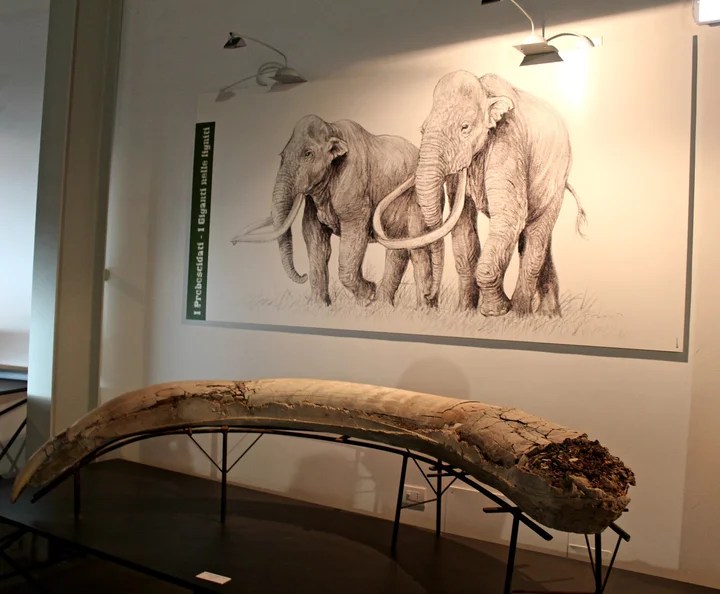
Mammoth Tusk on display at the Paleontology Museum
Mammoths were once very prevalent in the area and they had lived from about 2 million years ago to 9,000 years ago, during the last Ice Age (the Pleistocene Epoch). Just for super quick time referencing, the Pliocene lasted from around 5.333 million to 2.58 million years ago. It marked the beginning of the transition from a warm, moist climate (perfect coal making conditions) to the more fluctuating and cooler conditions of the Pleistocene, and saw the first appearances of early human species such as Australopithecus and Homo habilis. Ironically that flat plain was also the site of a large battle between Attila the Hun and Italians in the 440’s AD, he famously arrived on an elephant, only his elephant survived that battle and most of his troops including Attila died of the diseases they caught along the way. Those plains have seen elephants in both their prehistoric and historic forms.
For to march and drill
Over field and hill
Is a military goal
Lyrics by: J.Pat O’Malley – ‘Colonel Hathi’s March’
(With apologies, you try and find a decent song about elephants or even mammoths.)
But back to the main story; Luigi stopped what he was doing and went to the mine office to report what he had found and ask that they stop excavating the coal in that area just while it could be safely retrieved. The mine was hugely important for keeping not only Umbria going, but also Rome. The mine office said no, and get back to work.
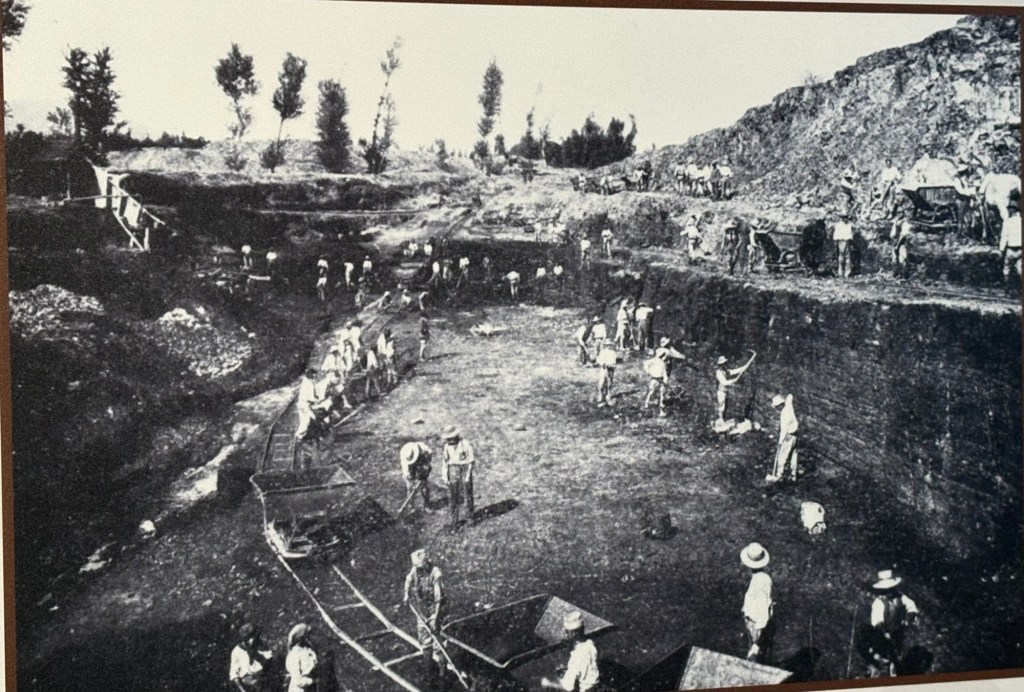
Historical photo of the Pietrafitta Lignite Mine.
But Luigi, thank the fossil gods up there, did everything he could to save the tusks. Taking time after his long shifts to dig them out and save what he could. But he kept on finding more and so he worked most nights looking for and removing what he could find and save. He even built iron frames to support the tusks and stored all the fossils carefully on racking in his own garage. This went on for years, and sometimes if he found larger remains, he would pour concrete over it to protect it from mine machinery, and come back later with friends to tip it over and bring it to his garage.
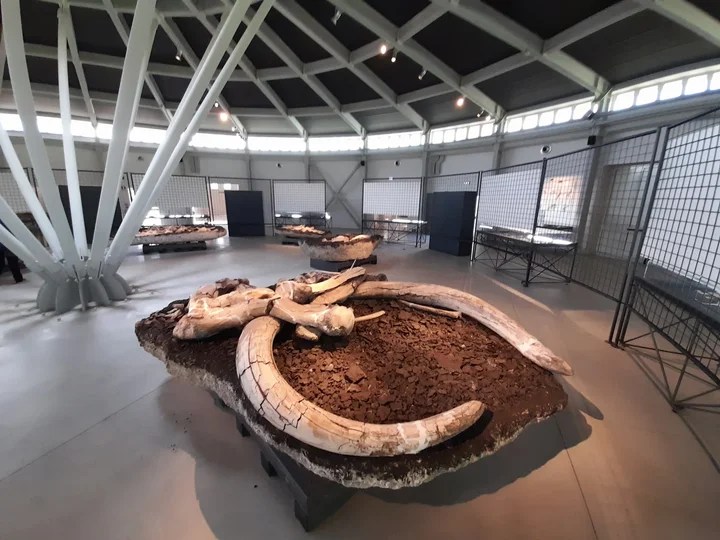
Mammoth Tusks still set in their concrete cocoon, cast by Boldroni
Years later when the mine company had wised the f*ck up and stopped being historical saboteurs, they began to allow the retrieval of remains. Sadly, by then, Luigi had died. But his legacy, his unbelievably unprecedented amount of work, dedication and fascination for what he found was not in vain. There is now a Paleontological Museum named after him, with all the fossils he found, including the upside-down ones, cast in cocoons of concrete, their contents too fragile and valuable to risk separating from the cement. Here in the museum, you can even see the iron frames he so carefully designed and forged.
His paleontological collection is displayed alongside that of the University of Perugia and the Umbrian Museums Department, his finds are considered a flagship of national paleontology and one of the most important in Europe, with current analysis looking at one of those mammoth tusks – from what is now known to be the largest mammoth in Europe, and possibly the world. It is an absolute whopper.
Over all those years, Luigi found thousands of fossils belonging to many animal species, such as fish, amphibians, birds, bears, rhinos and elephants, monkeys, turtles and several species of deer, including an unknown species and many more. Findings of seeds, leaves and shells were also included, as well as that precious collection of Mammoths, the Mammuthus Meridionalis.
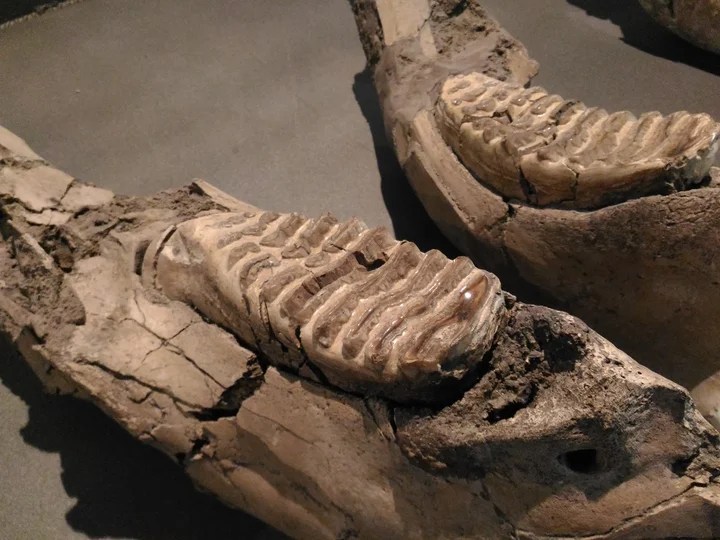
Mammoth Teeth
A few years ago, an underground car park was being dug out for a local shopping centre, and they found more mammoth remains, this time, they had learned their lesson and work was stopped while they were carefully removed and preserved.
I guess for me, his story began with such sadness at the loss of his father, and having to work so hard at such a young age. But his discovery and his tenacity in searching for, and preserving his finds, makes him nothing short of a hero. I studied paleontology as part of my degree and its importance as a science and historical reference point is incredible. He had no training but he knew the fossils were worth the hours of hard work and preservation, and he has left a ground-breaking legacy behind him.
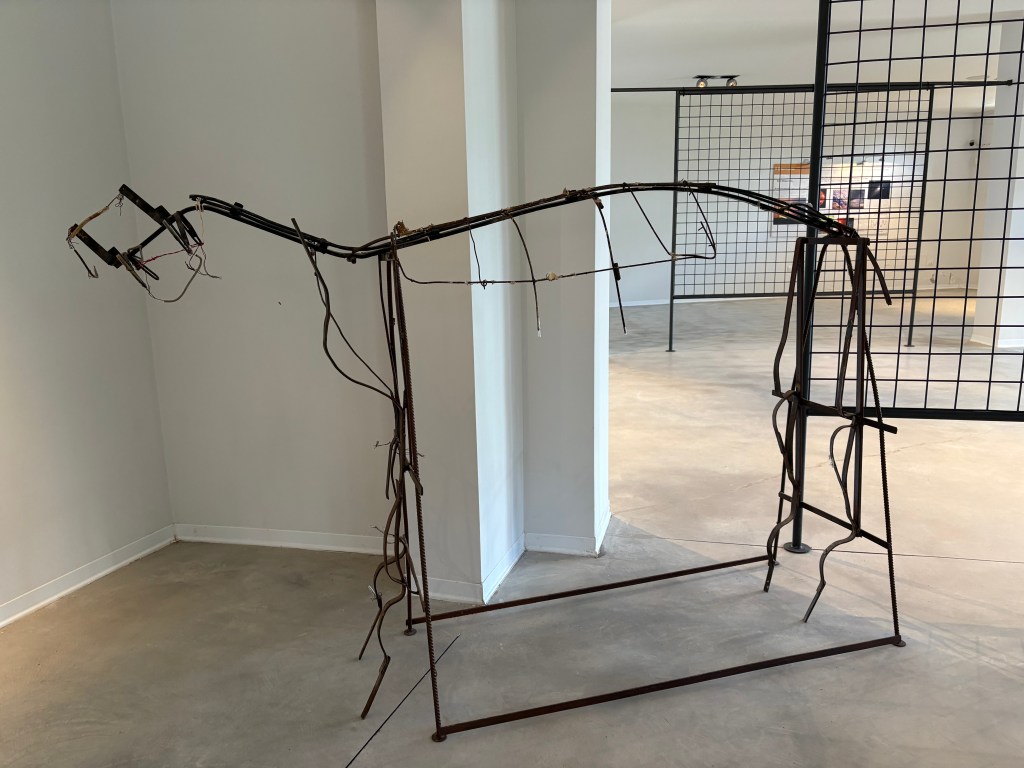
One of the original iron frames, forged by Boldroni to support a mammoth tusk.
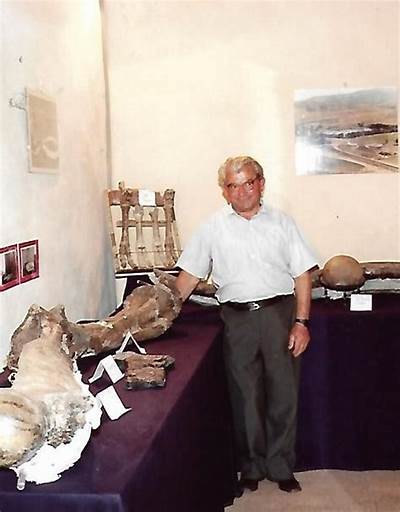
“I brought them back to see the sky and the Pietrafitta plain, where a million years ago they passed and grazed.”
Luigi Boldroni.
Follow me at: @write.upmystreet

 Write Up My Street